How to Choose Curtains: The 4 Decisions That Matter


I used to think curtains were just for privacy until I hung a pair in an empty corner and realized a room can feel finished by fabric alone. But choosing the right curtains? Well, that can feel overwhelming—and for good reason. I once ordered curtains two inches too short and stared at that sad little gap above the floor for three months before admitting defeat. There are so many decisions to make. Hanging height. Color. Pattern. Whether to layer in a shade or blind. And then there’s the question of whether you even need curtains at all (some of our favorite rooms let the light and architecture do the talking). Throw in an oddly-shaped window, and suddenly you’re frozen trying to figure out where to even start.
The good news? There’s a formula for this. And once you understand the design decisions that actually matter, choosing curtains becomes so much easier—and your room will look intentional and elevated in the process.
Design Decision 1: Proportion & Hanging Height
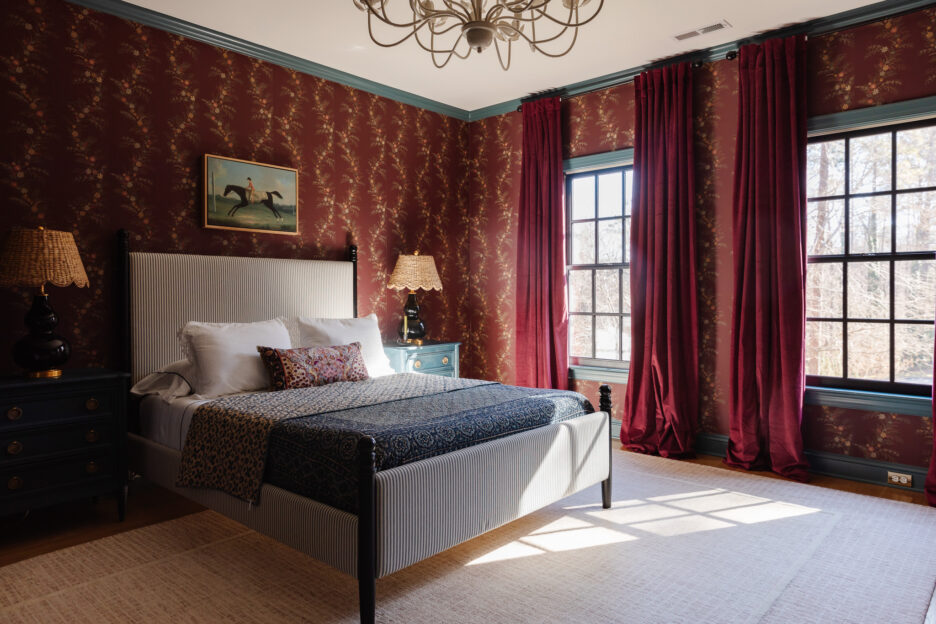
Curtains | Curtain Rods | Greta’s Room Sources
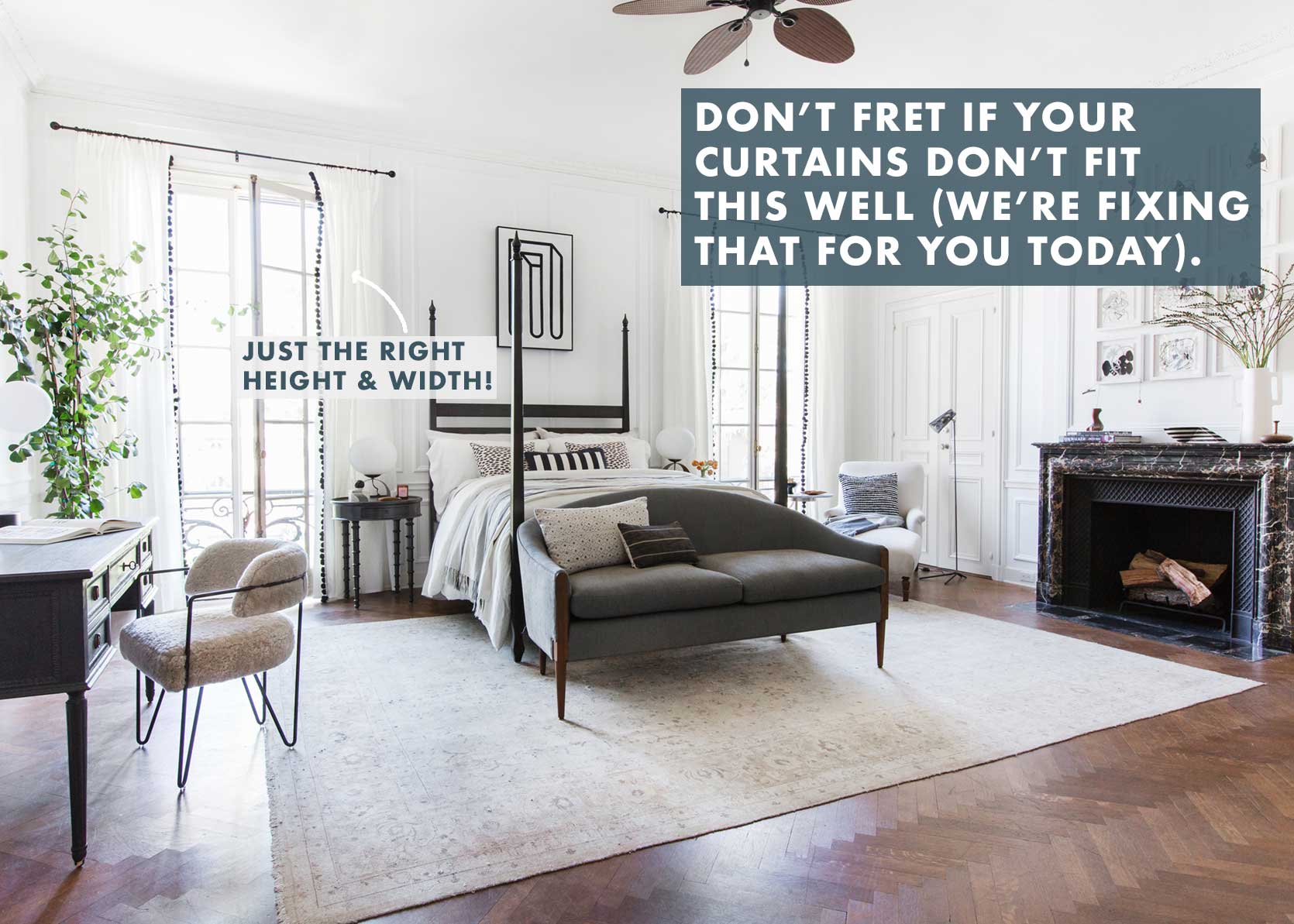
You’ve probably heard the advice to hang curtains “high and wide”—and there’s actually a really good reason for it. When curtains hang too close to the window frame, they visually shrink the window. Not ideal. Instead, hang them wide enough that when your curtains are fully open, the panels just kiss the edge of the window frame. Go any narrower, and you’ll block natural light when the curtains are open, which defeats half the purpose.
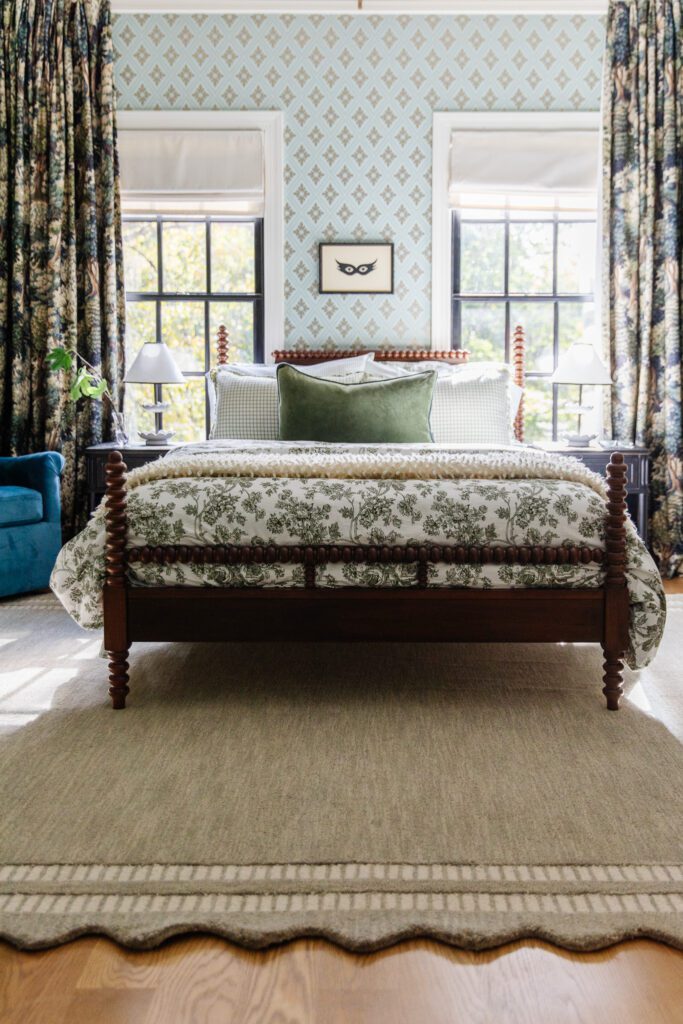
Curtains | Curtain Rod | Roman Shades | Faye’s Room Sources
When you have two windows sitting close together, here’s a clever trick: skip the curtains between them and double up panels on the outer edges instead (we did this in Faye’s bedroom). You get the best of both worlds—your curtains still provide full coverage when you want privacy and light control, but when they’re open, nothing blocks the window or disrupts the view. Plus, it looks intentional and curated rather than choppy.
Ideally, we always hang curtains floor-to-almost-ceiling when we can. There’s something about that full, uninterrupted line that feels luxurious and dramatic—and it genuinely makes a room feel bigger and more intentional. But we get it: not every ceiling cooperates. Vaulted ceilings, double-height spaces, and other architectural quirks mean floor-to-ceiling isn’t always an option. When that’s the case, aim to hang your rod at least 4-6″ above the window trim. It’s a small adjustment that still creates that lifted, elevated feeling.
Design Decision 2: Color and Pattern
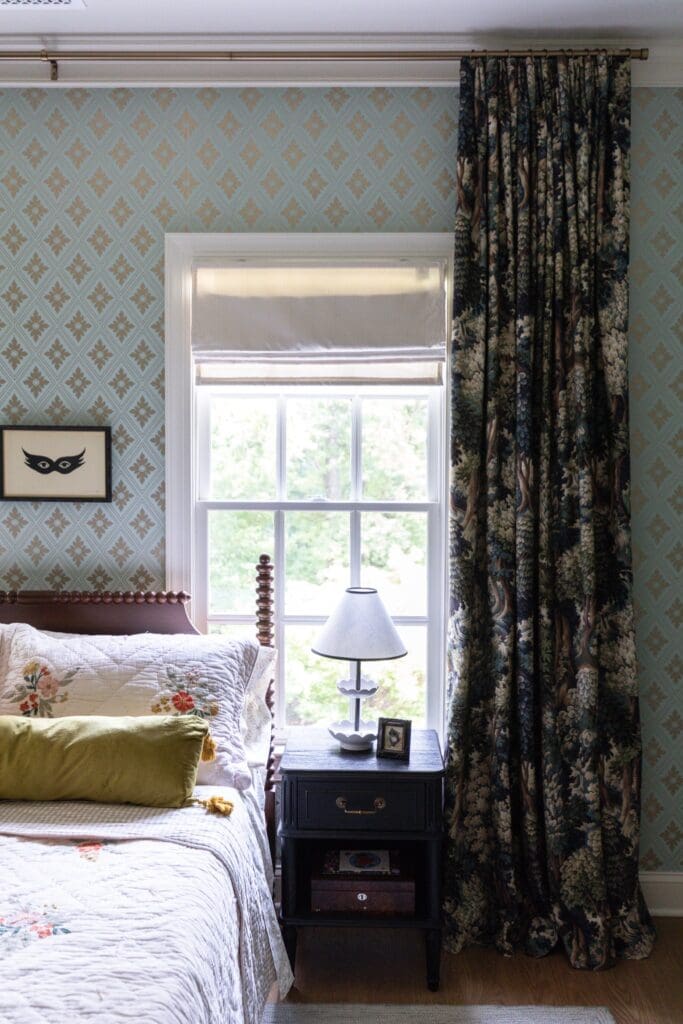
Your curtains can either be a supporting player or the star of the show. In Greta’s bedroom, the burgundy curtains do the supporting work—they echo the tone of her wallpaper, which lets the pattern itself be the focal point. In Faye’s bedroom, the curtains absolutely take center stage. The bold tapestry-like pattern reads much louder than the subtle wallpaper, making the curtains the room’s main visual anchor.
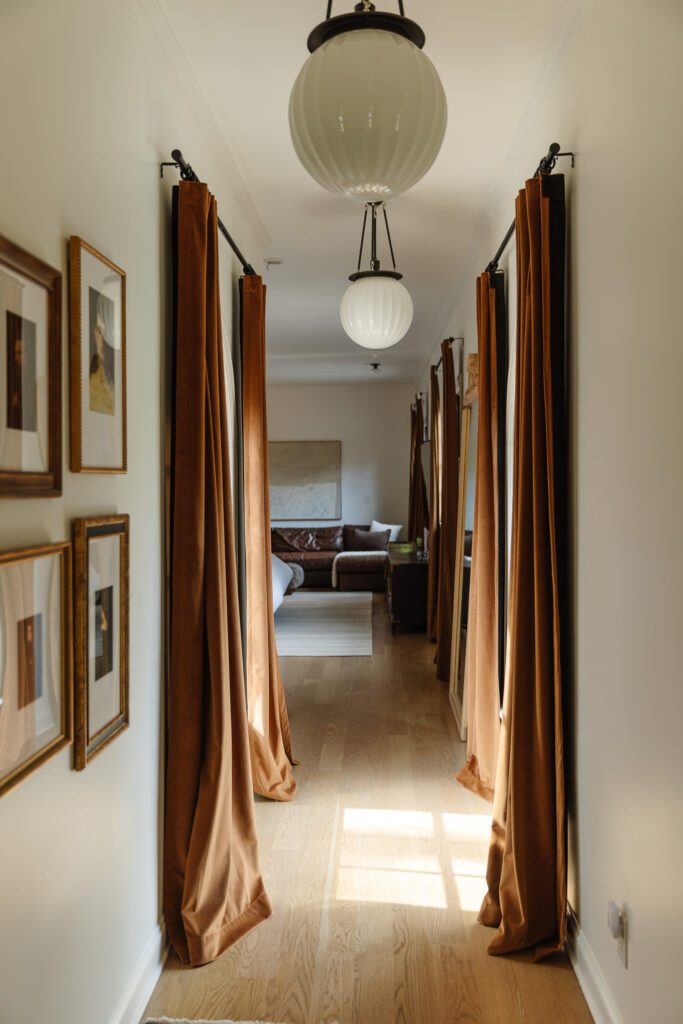
And solid curtains? They can be showstoppers too. I stumbled upon the perfect curtain color by accident. Before we painted our living room, I wanted to swap in darker curtains to our living room to make it feel more cozy. I envisioned a tone-on-tone moment with our then Farrow & Ball Pigeon walls, so I ordered some olive green curtains from Etsy. (Or so I thought!) Mistakenly, I’d ordered warm gold velvet curtains. I thought, “Ok, let’s try them anyway.” To my surprise, when we hung them up, they transformed the entire space. Bonus: They just look so cool anywhere I put them!
Now, those gold velvet curtains command the hallway and give the entire area instant warmth and character.
Curtains | Curtain Rods
One important note: resist the urge to make everything a main character. The pattern on pattern designs in Faye’s room works because the tones tie together and the patterns have different scales and weights — they’re speaking the same design language. But here’s the rule: if your wallpaper or another element is already doing the heavy lifting, let your curtains play the supporting role. It’s about giving each element room to breathe.
Design Decision 3: Roman Shades & Layering Window Treatments
Roman Shades | Polly’s Room Sources
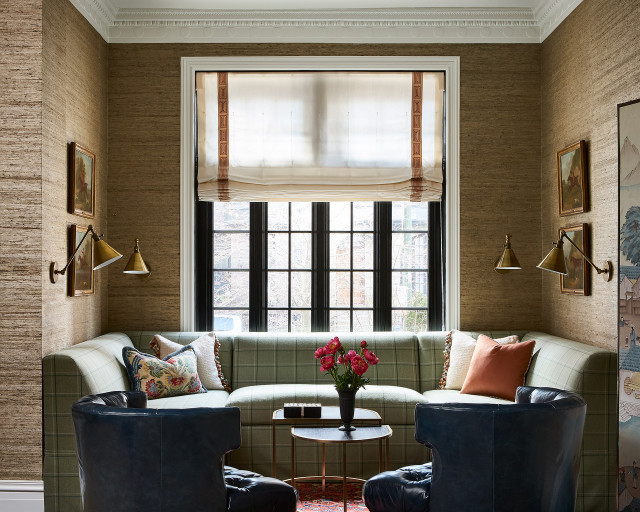
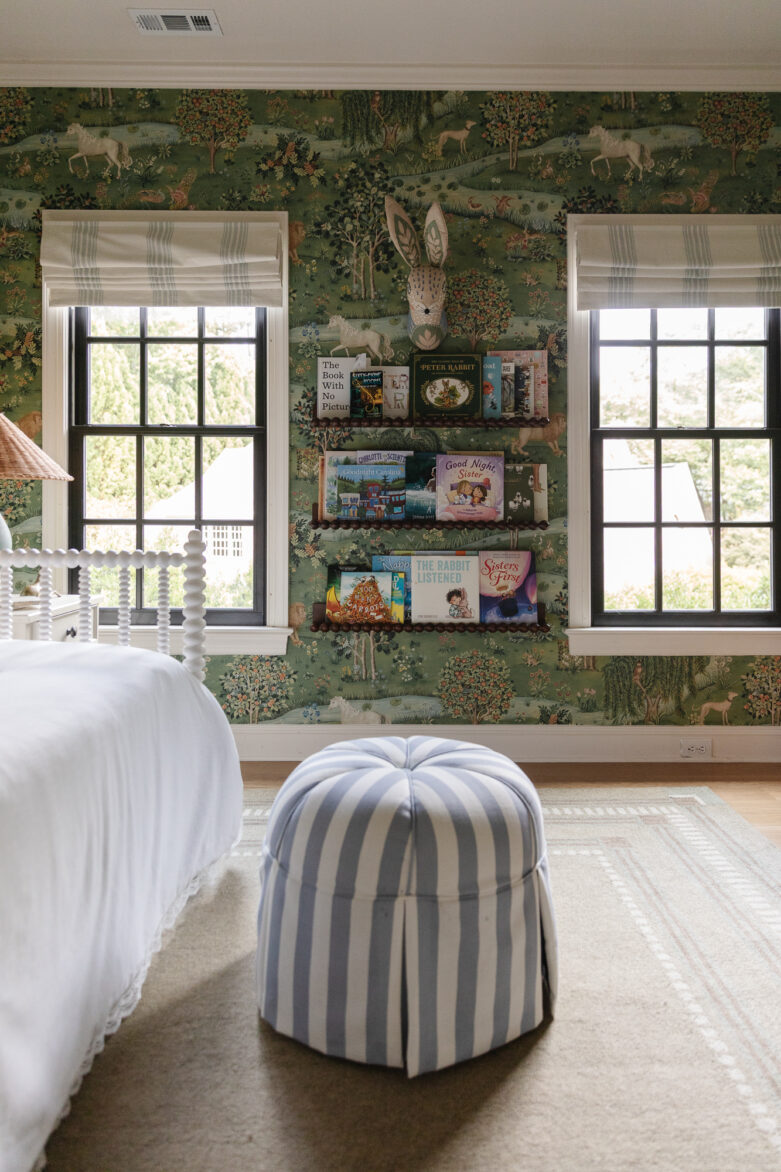
When you’re layering curtains with a shade, you have two design approaches to choose from. The first is to let the shade be a design moment in itself. In some rooms—like kitchens or bathrooms where floor-to-ceiling curtains aren’t practical—a patterned or textured shade adds visual interest without taking up as much real estate as a curtain would. In Polly’s room, we chose a striped roman shade that brings a subtle pattern to the space while letting her wallpaper stay the focal point.
Curtains (custom – similar) | Primary Bedroom Sources
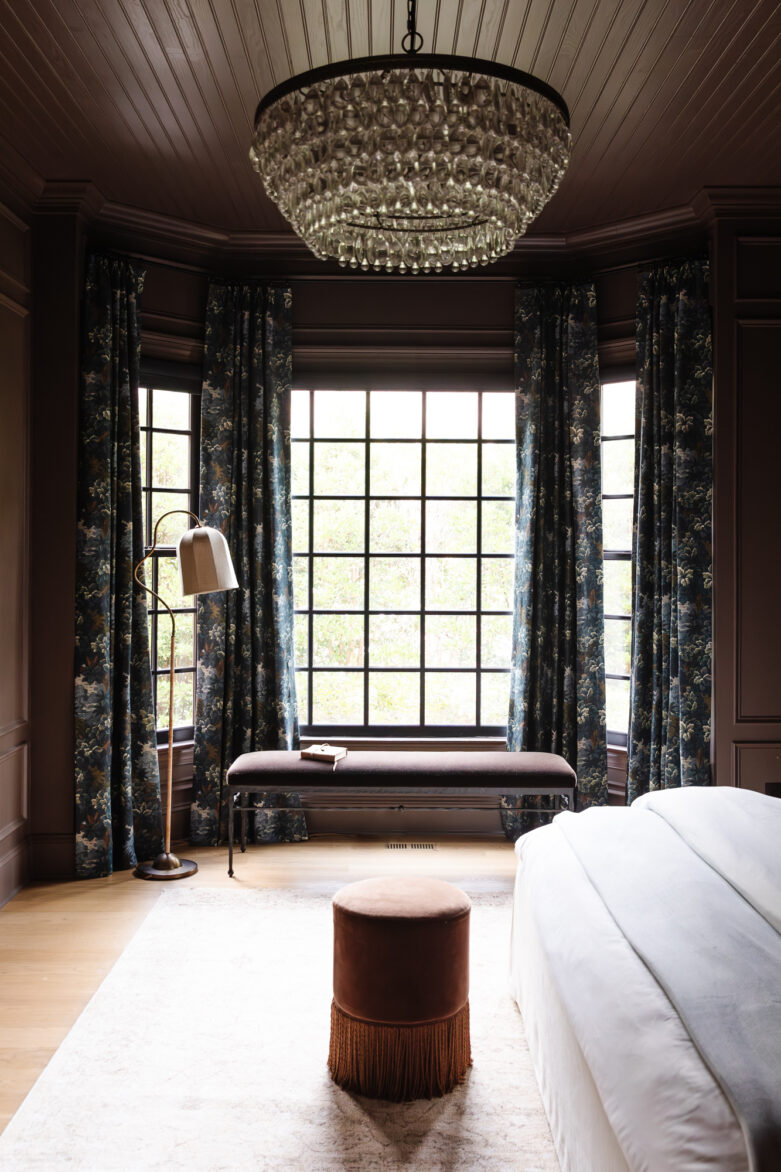
The second approach is to make the shade nearly disappear. In our primary bedroom, we used blackout roller blinds in black that blend seamlessly into our black window frames—you barely notice they’re there. They provide essential light control and privacy without competing with our patterned curtains. You can achieve the same effect with a roman shade by matching it to your trim color. In Faye’s room and the guest house, we used a white shade that virtually vanishes against the white trim, adding soft texture without distracting from the dramatic curtains.
Design Decision 4: Window Shape Considerations
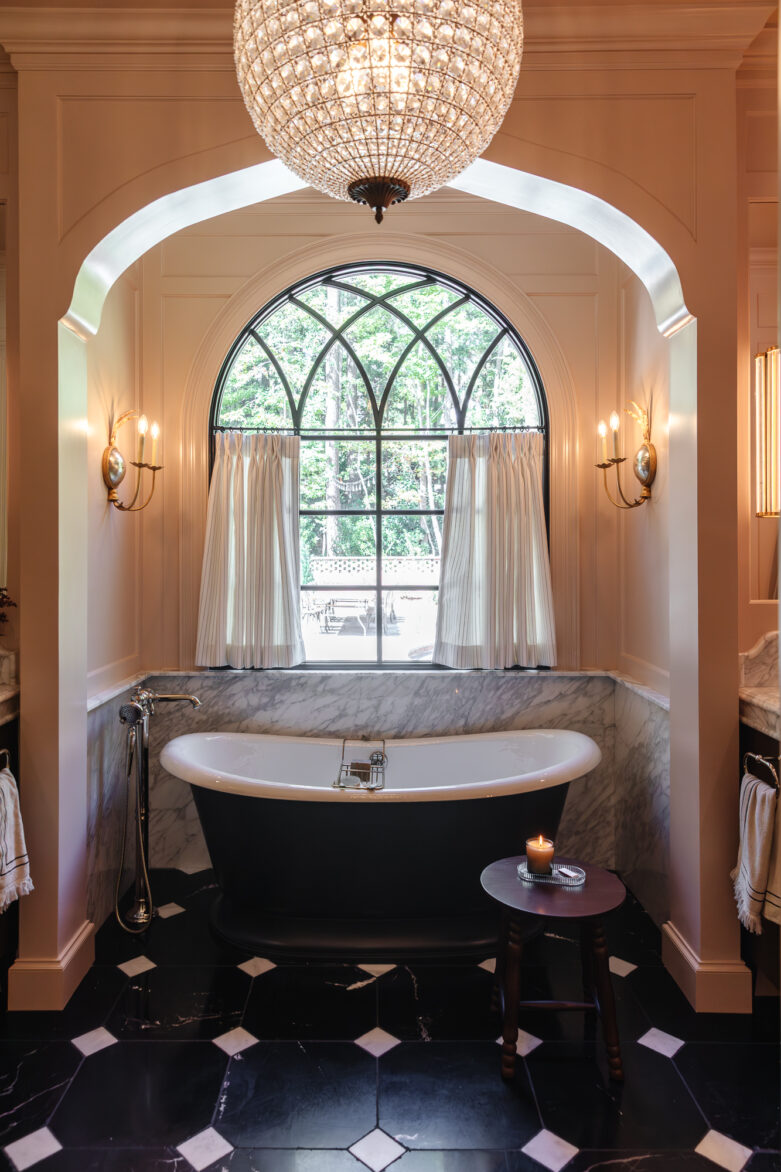
Similar Cafe Curtain | Primary Bathroom Sources
Arched windows are such a beautiful architectural moment—we have multiple throughout our house and we love them! But they’re also tricky when it comes to adding curtains without competing with that gorgeous shape. When you can, our preference is to leave them bare and let the architecture shine (like we did in the Bonus Room). If privacy is a necessity, a cafe curtain mounted just underneath the arch is a clean solution that doesn’t fight the window.
Bedrooms with arched windows are trickier, though, because you typically need both privacy and light control. Here’s what we’d do: hang a single rod above the arch (at least 4-6″ above the trim) and add curtains on either side in a tone that matches your walls. This might sound counterintuitive, but it works beautifully—the curtains essentially disappear, letting the arch remain the star of the show while still giving you the function you need.
Where to Source Curtains
Here’s something that might surprise you: almost every curtain rod in our house comes from Amazon (we’ve repurchased this one and this one countless times). Same goes for plenty of our curtains. The truth is, you don’t need to spend a fortune on every aspect of your window treatment. We save our splurges for moments when the curtain is doing the heavy lifting as a main design element—that’s when we’ll invest in a higher-end fabric or even go the custom route. For everything else? Amazon and other budget-friendly options work beautifully. One tip for budget-friendly shopping: big box stores rarely stock longer lengths in-store (and most people need longer than the standard 84″), so for extended sizes, online shopping is actually your best bet.
We’ve rounded up our favorite CLJ-approved window treatments below, organized by the design formulas we covered in this guide. You’ll find even more options in the Shop!
Related Posts