A New-To-Me Wood Preservation Method – Pine Tar

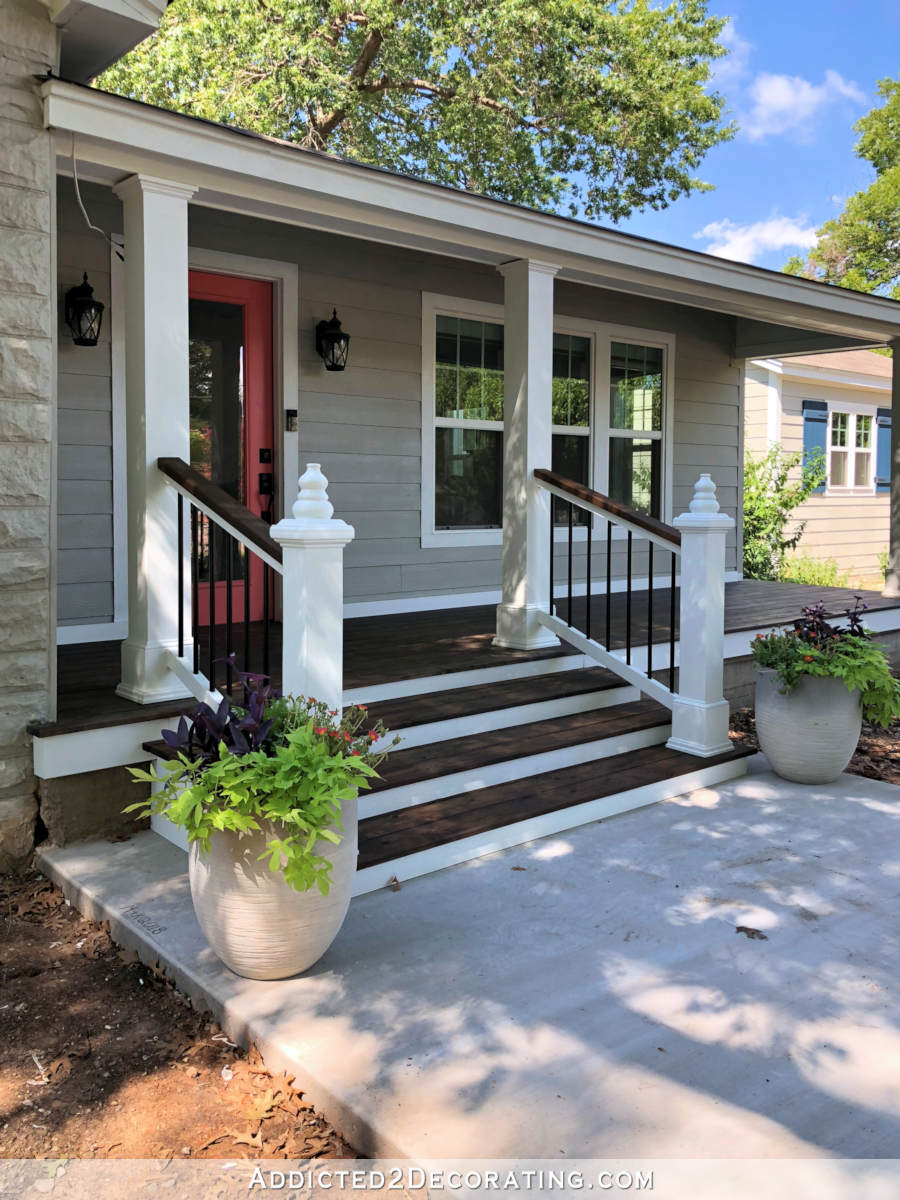
As I’ve shared in previous posts, I’ve been planning on painting the cedar boards on our front porch. I had made this decision after years of struggling to find an exterior stain or sealer product that actually works and holds up to the elements. I’ve tried several brands so far, all of which can be found at the local big box stores. I’ve tried Cabot Australian Timber Oil, Ready Seal, Thompson’s Timber Oil, among others. And every time, the wood looks fantastic right after the oil is applied.
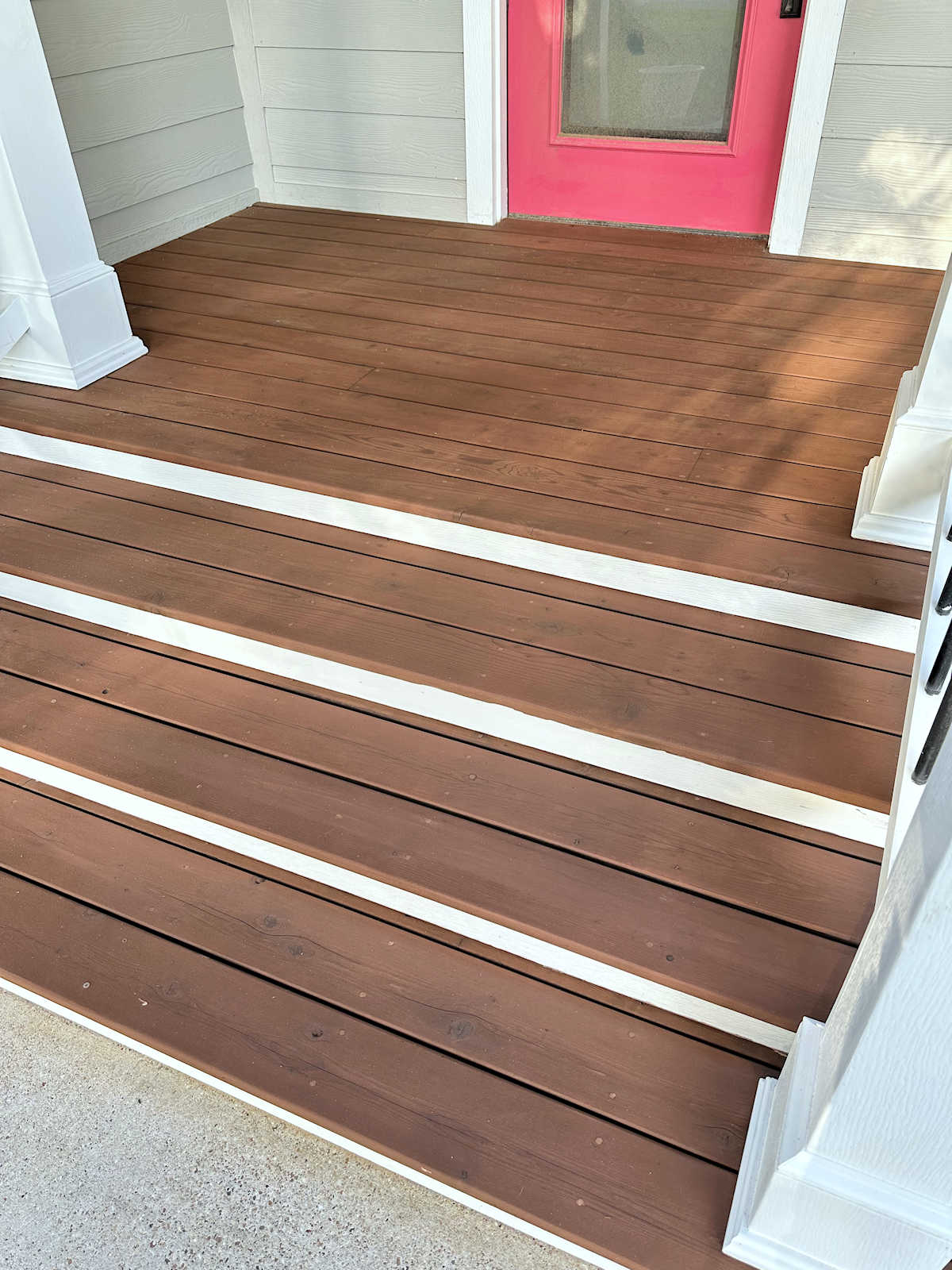
Here’s how it looked right after I finished applying the Thompson’s Timber Oil.
But so far, none of the options I’ve tried have lasted more than one year. After a year, the finish washes away and the boards start to look incredibly dry, grayed, and rough, and the color is faded and uneven.
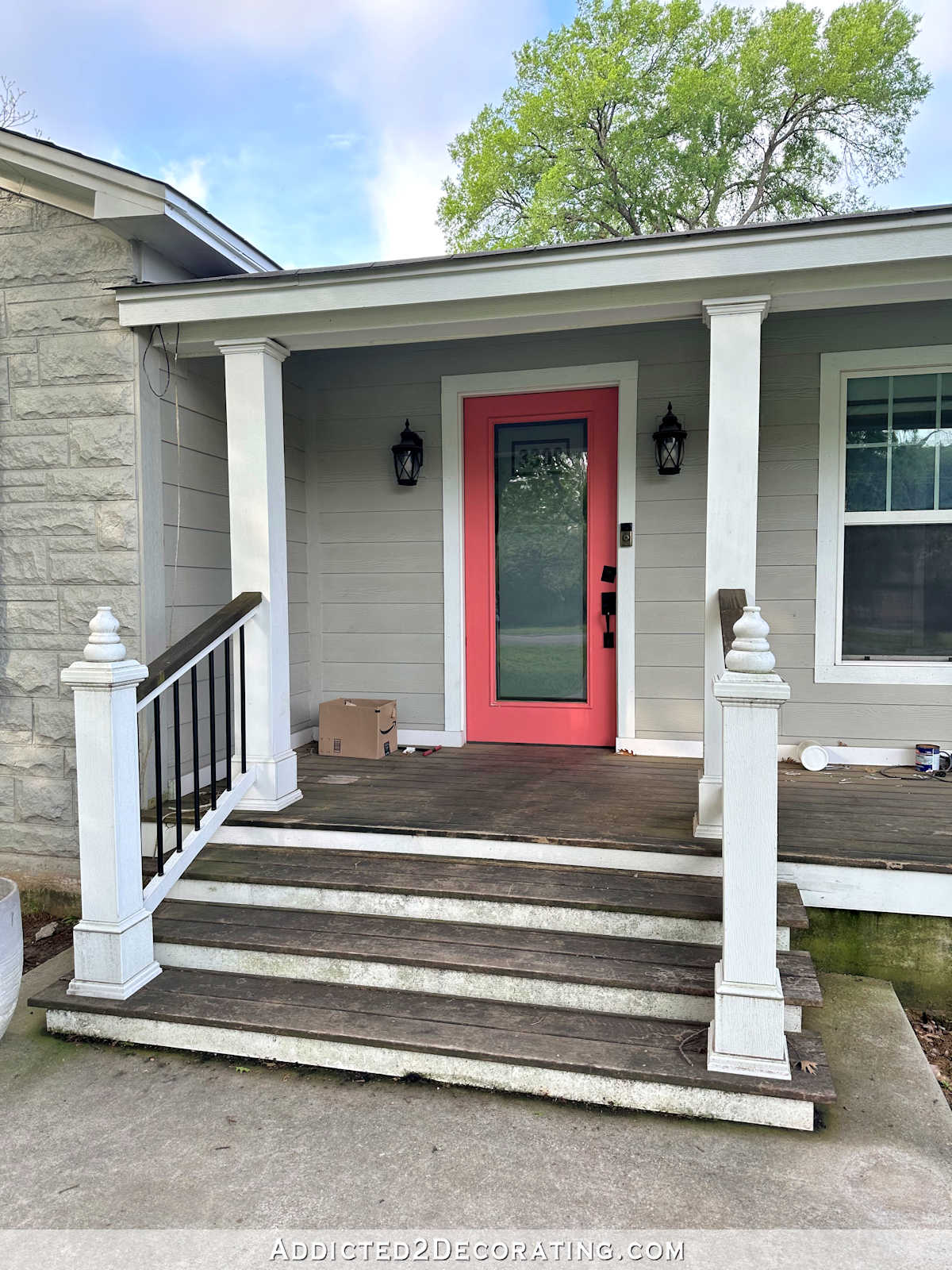
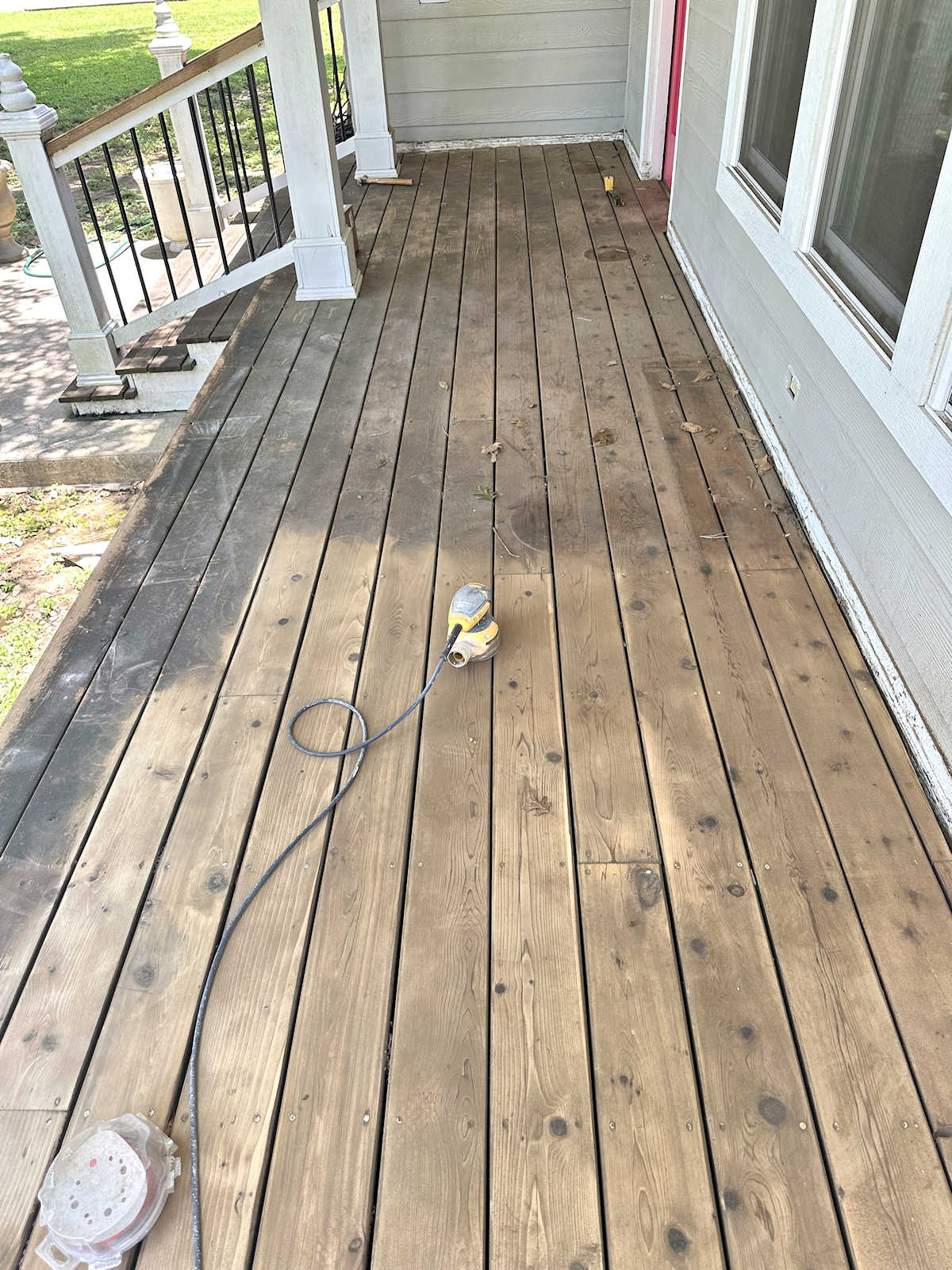
Here’s a closer view of just how bad the boards start to look after just one year. The posts are PVC boards, so they just get dirty. After a good wash, they still look fantastic. But the cedar porch boards begin to look awful pretty fast…
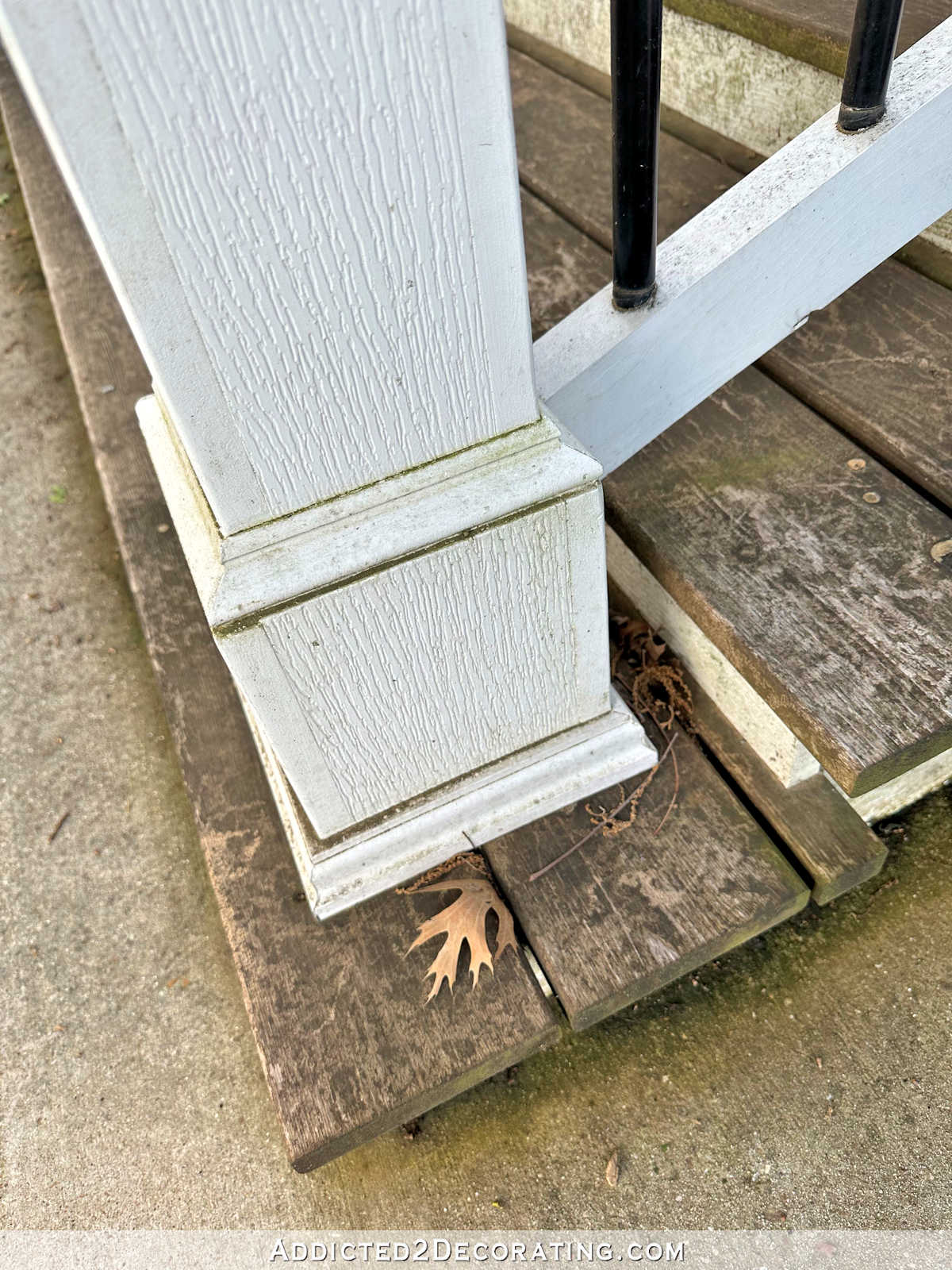
I think I’ve tried a total of five different products so far, and this has happened with all of them. None of them last. So in my frustration, I had decided to paint the porch boards with Behr Porch & Patio paint with the hope I could at least get two or three years out of a painted finish.
In preparation for priming and painting, I have, once again, sanded down my porch to get it ready for the new finish. So right now, it’s looking pretty good again. All of that old finish is gone, the gray is gone, the roughness is gone, and the cedar boards are looking fresh and ready to be sealed. And while I really wasn’t thrilled about painting them, I figured it was my best option at this point.
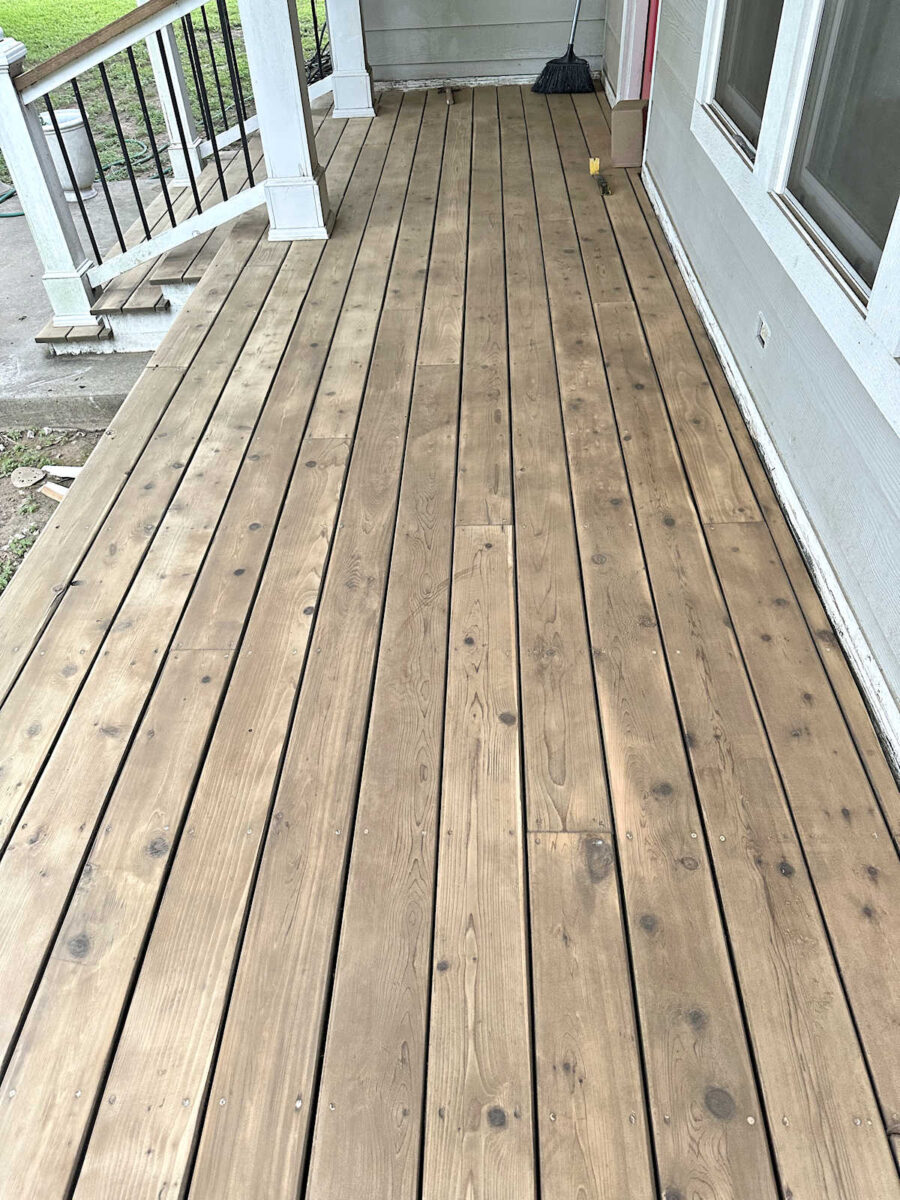
But as often happens, I got several comments on previous posts that made me second guess my decision to paint. I got comments like this…
“I would use oil based stain and tung oil finish for preserving your beautiful cedar wood. This info is online: Preserving outdoor cedar with an oil-based stain and tung oil requires combining a penetrating stain for UV color protection with tung oil to build a tough, water-resistant seal. This two-step process deeply penetrates the wood grain to protect against harsh weather and decay without peeling.”
That sounds great, but I’ve already tried that. Cabot Australian Timber Oil is a combination of three oils, including tung oil, combined with stain. I’ve been there, tried that, and it lasted a year (if that) before it started looking awful.
But then I also get comments like this…
“A word of caution — When we bought our house, the deck had just been painted. We’ve been here only a few years and it looks absolutely awful. The paint is peeling off everywhere. We’re not looking forward to the big job of getting the paint all scraped off so we can stain it instead.”
And of course, that is always the problem with painting wood for exterior purposes. The painted finishes look great…until they don’t. Wood likes the breath. It’s always expanding and contracting, and even more so when it’s outside. When you paint wood with a latex paint, you’re basically coating the wood in plastic. That’s fine as long as the coating is in perfect condition. But the moment that finish fails at any point, even if it’s just a hairline crack, water is going to find its way in there, it will soak into the wood, and then it won’t have a way to escape. So that water stays trapped inside the wood under that layer of plastic coating, and that leads to all kinds of problems like rotting wood and peeling paint.
But as I was reading and researching the best option, I came across something I had never heard of before called pine tar. Pine tar comes from the trunks of pine trees, and it’s harvested by heating up the wood by building a fire around it, which decreases the viscosity of the tar, allowing it to be harvested from the wood.
If you want to see the process (on a smalls scale) of pine tar being harvested, I came across this fascinating video of a man harvesting his own pine tar from which he made not only a sealer that can be used for wood, but also a salve that can be used on skin for cuts and scrapes.
Pine tar has been used for millennia for wood preservation, dating back to the Nordic Iron Age when it was used to protect ships and boats. It has been used to protect wood buildings like the Urnes Stave Church, which is Norway’s oldest and most elaborately carved and decorated stave church, built around 1130AD.
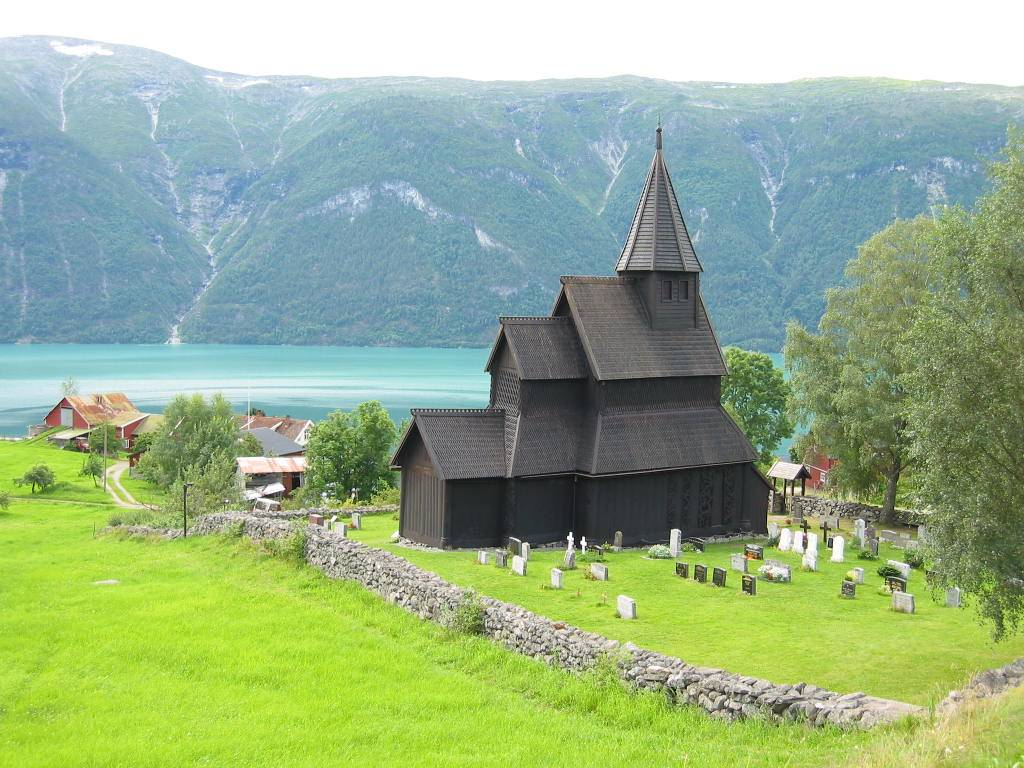
All of that to say that if it worked for the Vikings, I think it’ll work for my front porch. 😀
Once the pine tar is harvested from the trees, it can be thinned down (generally with purified raw linseed oil) and painted on with a brush just like an oil-based stain. It soaks deep into the wood and provides a natural UV protection while also sealing the wood and protecting it against insects, rot, water, etc.
The best thing about pine tar is that it’s all natural. solvent-free, and has no petrochemicals in it at all, so it’s completely environmentally friendly. And again, it’s been used for millennia specifically because it’s a natural, long lasting wood preservation method.
Pine tar isn’t as popular and well-known here in the U.S. as it is in other parts of the world like Norway, but there are companies that sell pine tar in the U.S. (or ship to the U.S.). You don’t get a wide color range in pine tar like you get with standard stains that you find at the local big box stores, but I did find a beautiful dark brown that will work perfectly for my front porch and the steps to my workshop. It comes from a company called Earth + Flax. The pine tar comes in a container that looks like this…
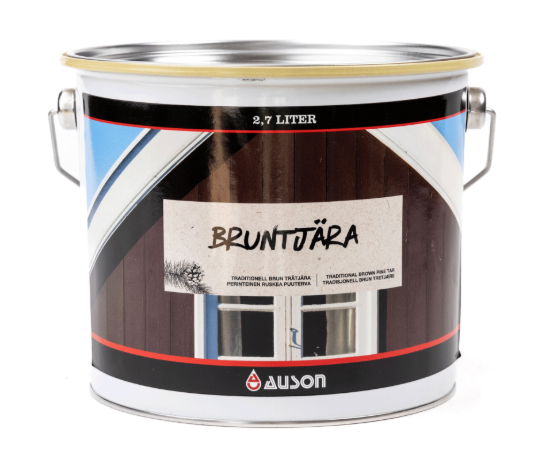
And the dark brown color looks like this…
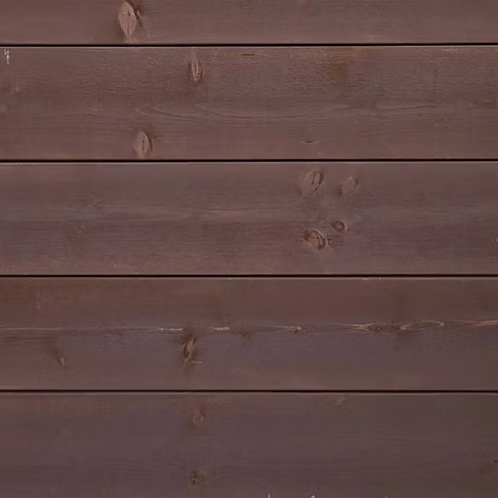
So after spending about an hour yesterday reading about pine tar, watching the videos on the Earth + Flax Instagram page, and learning all about pine tar, I’ve decided to try it. I’ll be the Guinea pig for all of us, and we’ll see just how well this millennia-old weather preservation method works for a central Texas cedar porch.
More About Our House Exterior & Yard
see all exterior &
yard diy projects
read all exterior &
yard blog posts

Addicted 2 Decorating is where I share my DIY and decorating journey as I remodel and decorate the 1948 fixer upper that my husband, Matt, and I bought in 2013. Matt has M.S. and is unable to do physical work, so I do the majority of the work on the house by myself. You can learn more about me here.