How to Clean Old Set-In Upholstery Stains

By now, as a responsible furniture owner, I know that spills and stains on upholstery should be cleaned immediately. It’s the right move, and it gives me the best chance of removing the stain completely. But let’s be honest — sometimes that just isn’t possible. And despite how a quick internet search might make it seem, if you’ve missed the window to blot a spill right after it happens, that doesn’t mean you’ll never get it out.
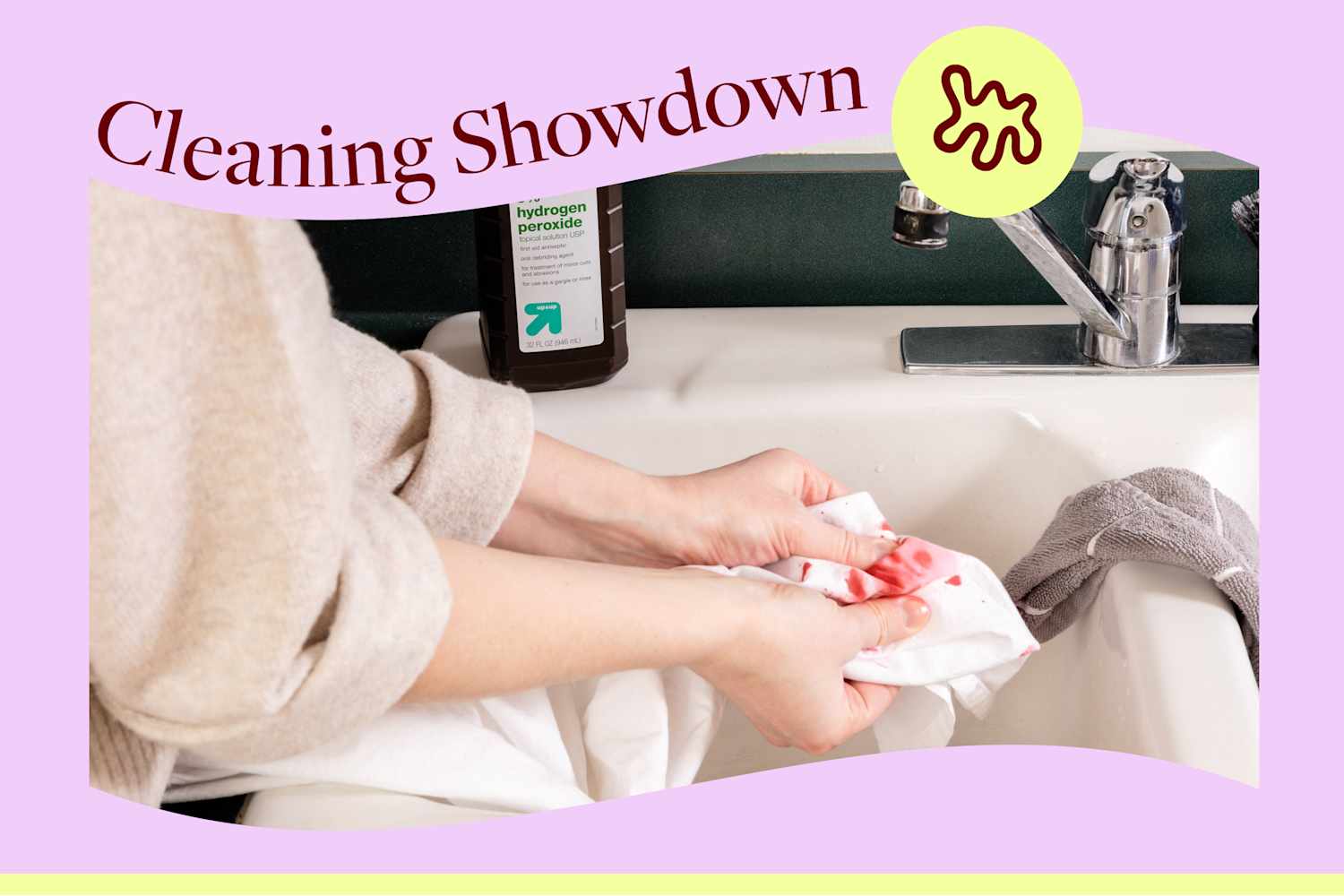
There are plenty of ways to revive upholstery, even if the stain has been sitting for a while. In my case, a few years ago a mover cut himself (without telling me) and bled on my living room furniture while it was being packed into storage for three months. I only discovered the damage when I unpacked everything in my new apartment, with blood smears on nearly every item. And while I couldn’t help but wonder why he didn’t say anything, I was ultimately left with many deeply-set stains to deal with. Here’s what I learned about getting old stains out of upholstery.
Check the Upholstery Cleaning Code
Before applying any cleaning solution, check the upholstery cleaning code on your furniture tag. These codes tell you what kind of cleaner is safe to use. Here are some common upholstery cleaning codes, for example:
If your furniture doesn’t have a tag (which is common with vintage or antique pieces), do a spot test in a hidden area first. Try a small amount of water, vinegar, or vodka on a cloth to see how the fabric reacts before treating the stain.
Identify Your Upholstery’s Fabric in Order to Clean It Properly
Different upholstery materials respond differently to cleaning, and knowing what you have can help you avoid damaging the fabric while treating stains. Here are a few of the fabrics you’ll see most often, and how to clean them:
Vacuum the Upholstery Before Treating the Stain
Upholstery should be vacuumed regularly to keep the fabric in good condition and prevent dust and crumbs from settling deep into the fibers. When dealing with an older stain, vacuuming is especially important. It removes loose debris and surface dirt that may be making the stain look worse than it actually is. In fact, it’s surprising how often a stain appears lighter once the surrounding dust and particles are gone.
Vacuuming also ensures you’re working directly on the stain itself rather than grinding dirt deeper into the fabric during cleaning. Use an upholstery attachment and vacuum the entire area before moving on to stain treatment.
Loosen the Stain with Steam (If the Fabric Is Water-Safe)
If your upholstery cleaning code allows water-based cleaning, a little steam can help loosen older stains. Steam softens dried residue and makes the stain easier to lift during cleaning.
For small areas, you don’t necessarily need a full steamer. I usually grab an iron and use the steam button while holding it just above the fabric. This introduces just enough moisture and heat to relax the stain without soaking the upholstery.
How to Spot-Clean Old or Set-In Upholstery Stains
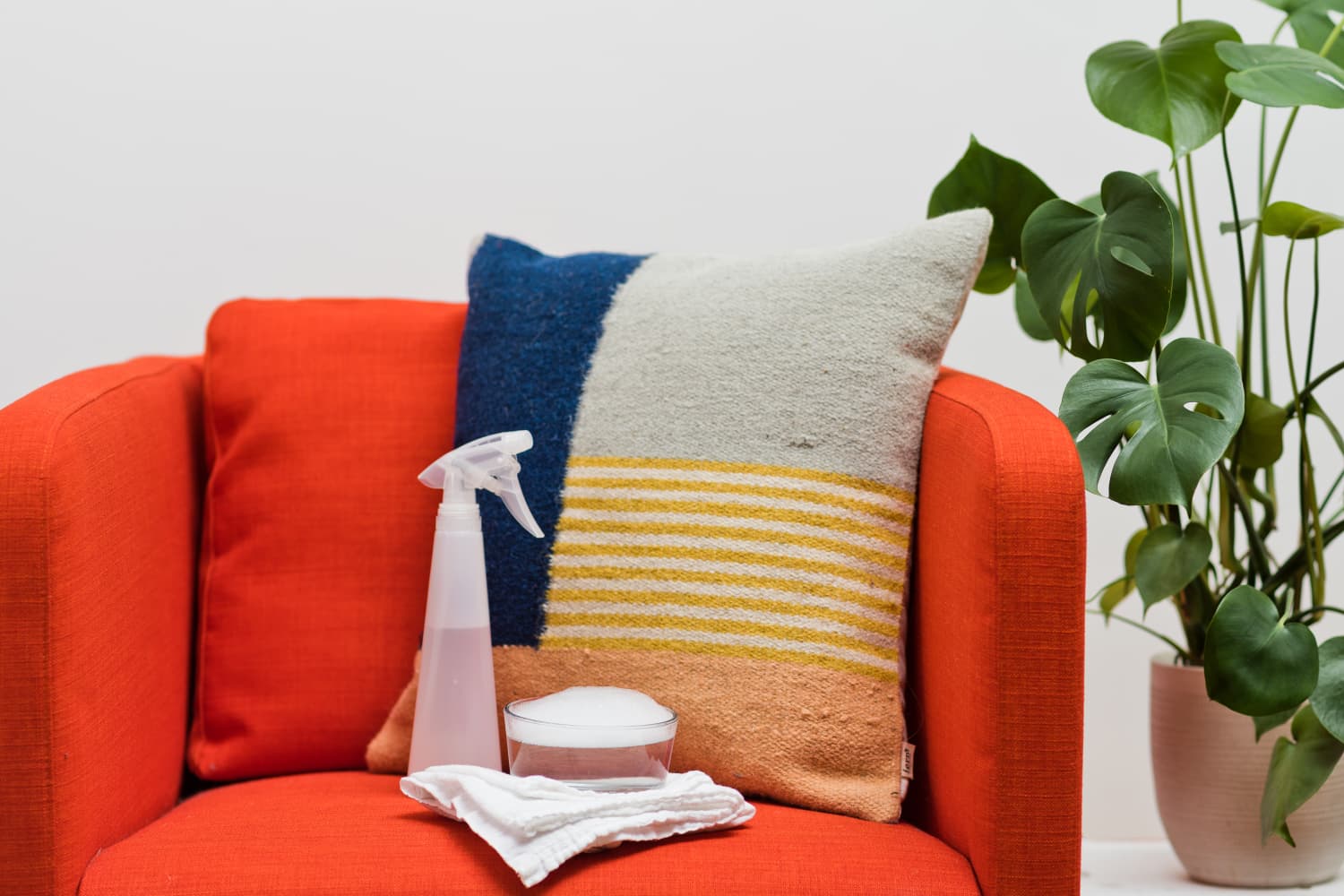
This is the stage where you hope a simple solution will do the trick. Here’s a simple five-step method to try first:
If your upholstery can’t be cleaned with water, use vinegar or vodka on a cloth to blot the stain instead. Both can help dissolve certain stains, and the smell will fade as the area dries.
Use a Heavy-Duty Stain Remover for Tougher Upholstery Stains
I’m fortunate that my stains came out without having to venture into this territory, but on several separate occasions when hot coffee or an entire glass of red wine has spilled, Wine Away has been a real lifesaver. It managed to entirely remove red wine stains from the two brand-new cream side chairs in my living room.
If your stain has survived this entire cleaning process, you are dealing with one stubborn stain. As exhausting (and, yes, irritating) as the process can be, doing it all over again can give you the result you’re looking for.
The previously mentioned wine-on-white-chairs situation took two full passes before the stains came out. I really thought when I tried a heavy-duty stain remover for the second time that there was no way these stains were going anywhere, but perseverance paid off and they disappeared! Just like that, the seemingly impossible-to-remove set-in stain has been conquered. In case a spill happens in the future that you can take care of immediately, here are some tips and tricks for how to spot clean upholstery stains that have just happened.